
Moving Together: 5 Evidence-Based Ways to Build Truly Inclusive Physical Activity Information
Every child deserves the chance to experience the joy, connection, and confidence that comes with physical movement. Yet, for families of children and youth with disabilities, finding accessible, welcoming, and meaningful physical activity opportunities can often feel like an uphill battle.
As educators, coaches, and recreation leaders, how do we bridge this gap?
The answer lies in intentional, evidence-based design. The Assisting, Informing and Motivating Physical Activity (AIMPA) lab at York University has established five practical recommendations for creating inclusive physical activity information for families of children and youth with disabilities. These recommendations are designed to help leaders ensure that every participant feels welcomed and empowered to join in.
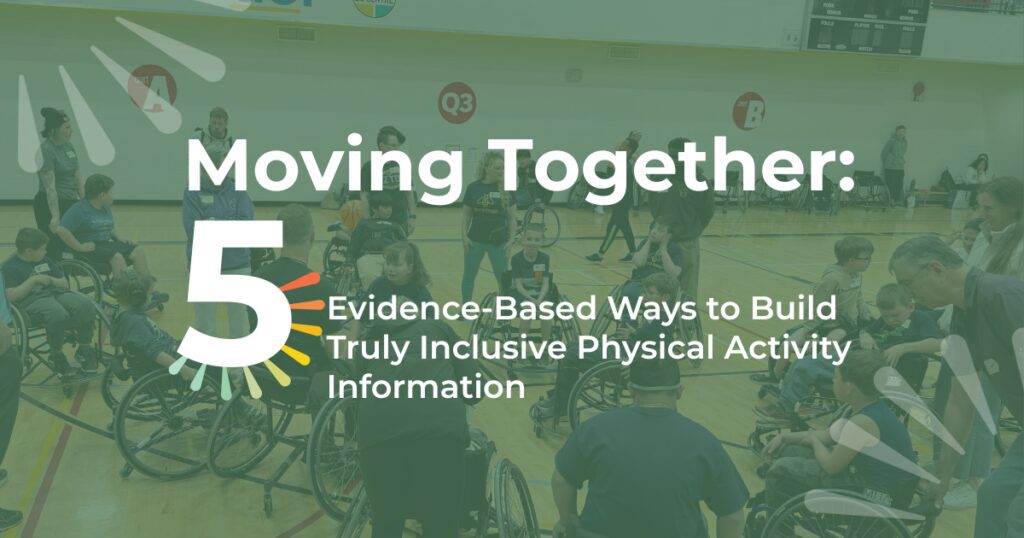
We recently put these recommendations into action at our Adaptive Sport Festival. By embedding AIMPA’s framework into our event planning, we saw firsthand how evidence-based strategies translate into real-world success.
Here is how we applied the five recommendations, along with actionable takeaways you can bring directly into your classroom, gym, or community programs.
1. Get the Language Right: Provide Clear and Consistent Definitions
Inclusion starts with shared understanding. AIMPA’s first recommendation emphasizes using clear, consistent definitions for terms like physical activity, adapted, and inclusive. When everyone speaks the same language, families and participants can easily find the information they need and know exactly what to expect.
How We Used It:
Throughout our Adaptive Sport Festival, staff and volunteers modeled this approach by clearly defining terms in all communication materials posted at the event.
Here are some sample definitions you can use in your spaces:
- Physical Activity: Refers to any bodily movement produced by skeletal muscles that results in energy expenditure and increases heart rate and breathing.
- Adapted Physical Activity: Refers to sport, play, exercise or physical activity programs that have been adapted or modified to allow for full participation by children and youth with particular disabilities. Please note, we often use the term “Adaptive” when referring to adapted physical activity since it aligns with our event partners, Medicine Hat Adaptive Sport and Recreation (MHASR). While they are often used interchangeably, adaptive is an adjective that describes behaviours, skills, and functions.
- Accessible Physical Activity: Refers to information, products, services, and space that have the flexibility to accommodate the needs and preferences of each child and youth regarding physical activity.
- Integrated Physical Activity: Refers to sport, play, exercise or physical activity settings where children and youth are brought into a program that has been designed for those without disabilities. There may be extra support for children and youth with disabilities.
- Inclusive Physical Activity: Refers to sport, play, exercise, or physical activity programs that provide the same opportunity for children and youth with and without disabilities to participate in the same activity.
2. Provide Clear Program Information Ahead of Time
Participants and families benefit from understanding what activities involve and what accommodations or supports may be available ahead of time. They also value information about physical activity program staff and facilities.
How We Used It:
Before the Festival, teachers were sent a social story with photos of the locations that would be used throughout the event. During the Festival, students rotated through structured stations with clear guidance and demonstrations. Lesson plans with modification suggestions were displayed at each station, helping teachers, educational supports, and volunteers better understand how activities could be adapted to support diverse abilities and participation styles.
Here are some ways you can implement this recommendation in your spaces:
- Preview the Play: Provide visual demonstrations, step-by-step instructions, or picture cues before starting activities.
- Set Expectations: Sharing activity expectations and possible modifications ahead of time can also help students feel more prepared and confident to participate. Be sure to include information about the Who, What, Where, and When of the physical activity opportunities you provide.
3. Highlight and Measure the Benefits
Inclusive physical activity opportunities can foster confidence, social connection, mental wellbeing, physical literacy, and a sense of belonging. Highlighting these benefits helps to motivate families and loop in community support.
How We Used It:
During the Festival, students were taught about the benefits of physical activity. Students experienced these benefits firsthand; 100% of participants surveyed reported having fun during the festival (n=49) and 100% reported that the festival made them feel like they belonged and were a part of the group (n=47).
In your space, you can:
- Teach the “Why”: Routinely talk to students and their families about the benefits of physical activity, including improved physical health and overall wellbeing.
4. Co-Create Tools for Physical Activity Planning
True inclusion means giving participants, and by extension, their families, the concrete skills to set goals, track progress, and map out physical activity. When educators and recreation leaders build behavioural regulation tools into their programs, they help participants develop the routine and self-regulation needed to successfully sustain an active life.
How We Used It:
During the Adaptive Sport Festival, we shared goal setting, planning, and progress teaching resources with teachers in hopes they would share them with the students and their families as a way to help the students stay engaged with physical activity. We also provided them with information about Ever Active’s partner organization, MHASR, and their programs.
Some takeaways for your spaces:
- Embed SMART Goal Setting into Activities: Help participants take ownership of their movement by guiding them through Specific, Measurable, Achievable, Relevant, and Time-bound targets (e.g., aiming for a specific number of active minutes in class, or setting a baseline for a new skill using a simple tracking sheet).
- Establish a Proactive “Plan B”: Classroom and recreation spaces are full of unpredictable shifts. Teach participants how to use “if-then” planning to navigate sudden obstacles like bad weather or sensory overload (e.g., “If the gym gets too loud, then I can move to the designated quiet activity circuit”).
- Provide Visual Trackers and Progress Tools: Use visual logs, daily checklists, or charts within your space to celebrate progress. Share these tools with families so the same goal-setting routines and active habits easily transfer from school or rec programs to the home environment.
5. Proactively Address Barriers Through Strategic Communication
Children with disabilities experience complex, multi-layered barriers to movement, ranging from low motivation and physical safety anxieties to systemic and program-level obstacles. Leaders and teachers can dismantle these barriers by embedding targeted solutions directly into their program design and maintaining a strong loop of open communication.
How We Used It:
During the Adaptive Sport Festival, the tone of the day was set through a group welcoming activity where facilitators provided students with strategies to overcome potential barriers that they may face throughout the day. The event itself removed social and participation barriers by providing a space for participants to connect with their peers. A participant exclaimed it best, “My friends are here!”
Here are some ways you can implement this recommendation in your spaces:
- Target Emotional and Social Barriers First: Address fears of isolation or physical safety by prioritizing non-competitive play, highlighting cooperative goals, and ensuring safety practices are clear. Boost confidence by using positive reinforcement that explicitly praises a participant’s effort and personal progress rather than just performance.
- Keep Play Dynamic and Fun: Counteract low motivation by involving participants in the decision-making process. Let them choose between different game formats, select music, or pick from an array of unstructured physical activities (like a dance party, tag, or a group walk/roll) to emphasize pure enjoyment.
- Communicate Deeply, Frequently, and Intentionally: Move beyond surface-level check-ins. Regularly ask participants, and connect with their families to ask meaningful questions to track their experience. Dig into how their mood or motivation shifts before and after a session, and use that direct feedback to instantly adapt your environment and remove friction.
Bringing Inclusion to Your Context
By intentionally pairing AIMPA’s five evidence-based recommendations with practical adjustments, our Adaptive Sport Festival shared information to support students of all abilities to thrive.
Bringing these same approaches into your daily classroom or coaching practice can transform a standard gym period into a welcoming, active learning environment where no one is left on the sidelines.
Want to dive deeper? To learn more about AIMPA’s five recommendations and access their comprehensive implementation toolkits (available in both English and French), visit their website and download their free resources today!
written by Louise McClelland with the help of AIMPA Lab